

Why Every Carrier Should Be Obsessed with CSAT

And why it's not about feeling good
In logistics, it's easy to measure what's operational.
- • On-time percentage.
- • Cost per stop.
- • Scan compliance.
- • Photo proof of delivery.
Those metrics matter. But they don't tell you how the delivery actually felt.
And in modern commerce, how a delivery feels often matters more than whether it was technically on time.
CSAT Is a Feedback Engine, Not a Trophy
Customer satisfaction scores are often treated as something to celebrate in a quarterly report.
That misses the point.
CSAT exists to surface friction.
Customers don't write feedback about what's working. They write about what's confusing, frustrating, broken, or unexpectedly great.
Consistent post-delivery feedback reveals insights dashboards never show:
- • Was the driver friendly and professional?
- • Was the package placed thoughtfully or left exposed?
- • Was the ETA window accurate?
- • Did tracking feel reliable?
- • Did the driver communicate before arrival?
- • Did someone go above and beyond?
These are experience metrics. Experience drives retention.
"Delivered" Is Not the Same as "Successful"
Legacy networks define success as Delivered.
Modern retail defines success as Would you order again?
Post-purchase experience plays a major role in repeat purchase intent. Delivery is one of the final brand touchpoints before that decision is made.
If a package arrives late without warning, left in plain sight, with unclear tracking, the scan may say complete. The customer may say otherwise.
CSAT bridges that gap.
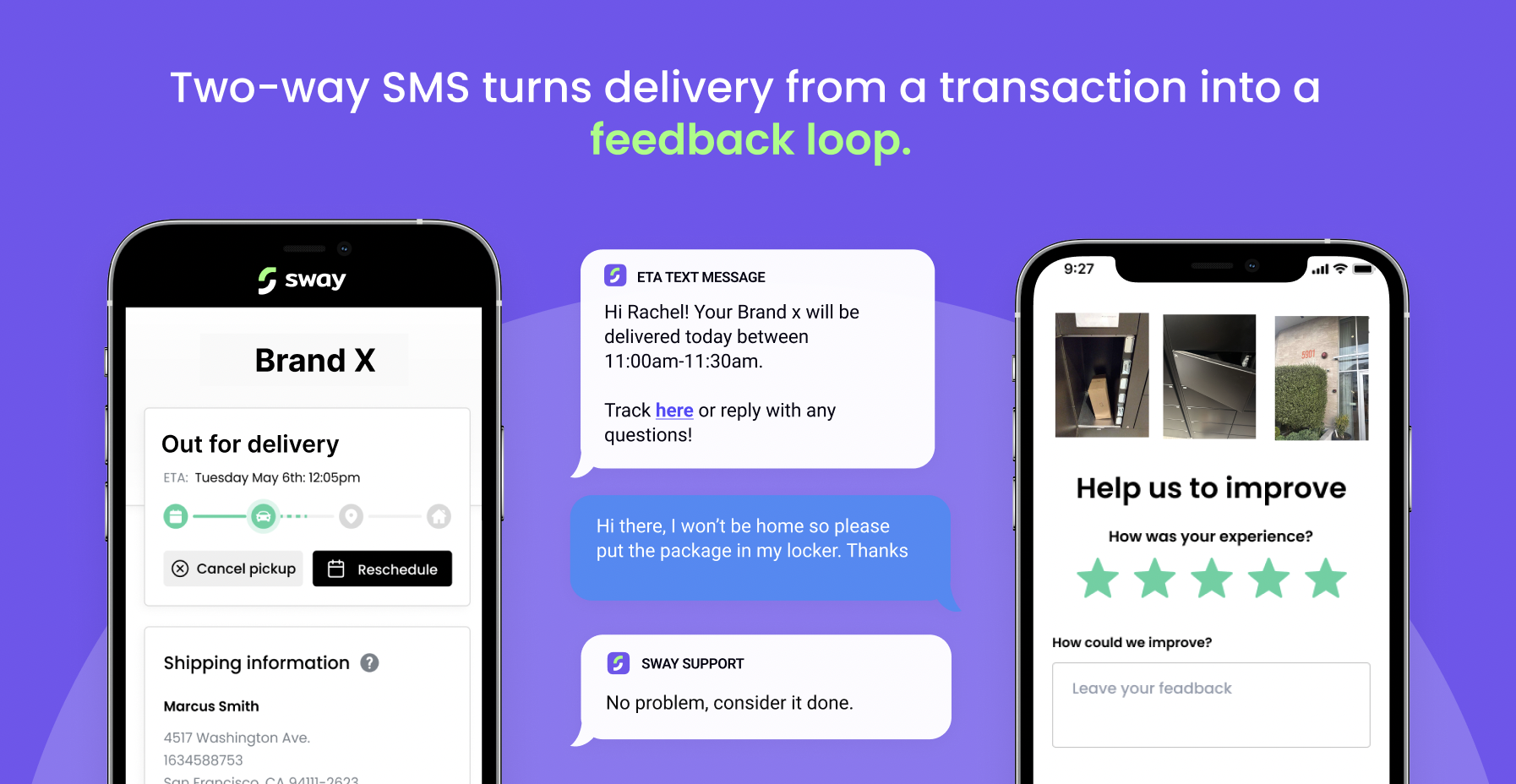
Feedback Fuels Continuous Improvement
The value of CSAT is not the score. It's the patterns.
When feedback is categorized and reviewed consistently, it highlights:
Tracking confusion
Unclear ETA windows
Poor package placement
Communication gaps
Exceptional driver behavior
Market-specific friction
Each theme becomes an opportunity:
- → Tighten routing logic
- → Improve SMS communication
- → Refine SOP
- → Adjust training
- → Build new features
Carriers that treat CSAT as a weekly operating input improve faster. Small friction points compound quickly at scale.
Brands Want Visibility
Retailers increasingly expect more than operational reporting.
They want to know:
- • Are customers satisfied with the experience?
- • Are certain ZIP codes producing friction?
- • Are ETA windows too wide?
- • Are drivers representing the brand well?
CSAT turns logistics from a black box into a collaborative conversation.
That transparency strengthens partnerships.
CSAT Should Shape the Roadmap
Customer comments often expose product gaps:
"The tracking didn't update all day."
→ Implement IoT sensors or cloud-based TMS for end-to-end real-time visibility.
"It was left in the rain."
→ SOP / Training Gap (Need clearer placement guidelines)
"I wanted it left in a locker, not at my front door."
→ Push Notification Overrides: Use "Audio Alerts" or mandatory pop-up blockers in the driver app that require the driver to acknowledge specific delivery notes before they can complete a scan.
CSAT is real-time user research for carriers. Ignoring it is like building software without listening to users.
The Goal Is Insight, Not 5.0
A high average score is meaningless if no one reads the comments.
The real KPI should be:
- ✓ Response rate
- ✓ Theme identification
- ✓ Speed of action
- ✓ Improvement over time
A slightly lower score with rich insight is more valuable than a perfect score with no signal.
The Takeaway
Delivery isn't just logistics.
It's experience.
And experience improves when you listen.